Check out in INSTAGRAM

Instagram

Wednesday, 6 November 2013

Computer Name and IP Change through Batch file

step 1 : Open note pad
step 2 : Copy and paste the below content

@echo off
SET /P PCNAME=Please enter your name:

REG ADD HKLM\SYSTEM\CurrentControlSet\Control\ComputerName\ComputerName /v ComputerName /t REG_SZ /d %PCNAME% /f
REG ADD HKLM\SYSTEM\CurrentControlSet\Control\ComputerName\ActiveComputerName\ /v ComputerName /t REG_SZ /d %PCNAME% /f
REG ADD HKLM\SYSTEM\CurrentControlSet\Services\Tcpip\Parameters\ /v Hostname /t REG_SZ /d %PCNAME% /f
REG ADD HKLM\SYSTEM\CurrentControlSet\Services\Tcpip\Parameters\ /v "NV Hostname" /t REG_SZ /d %PCNAME% /f
PAUSE

@echo off
SET /P ip=Please enter your ip:
SET /P mask=Please enter your mask:
netsh int ip set address name="Local Area Connection" source=static addr=%ip% mask=%mask%
pause

step 3 : Save as CHANGE.BAT (.bat format)
step 4 : Run the batch file 

Tuesday, 5 November 2013

Routing

Introduction

Routing is one of the most important features in a network that needs to connect with other networks. In this page we try to explain the difference between Routed and Routing protocols and explain different methods used to achieve the routing of protocols.The fact is that if routing of protocols was not possible, then we wouldn't be able to comminucate using computers because there would be no way of getting the data across to the other end !

Definition

Routing is used for taking a packet (data) from one device and sending it through the network to another device on a different network. If your network has no routers then you are not routing. Routers route traffic to all the networks in your internetwork. To be able to route packets, a router must know the following :
*Destination address
*Neighbor routers from which it can lean about remote networks
*Possible routes to all remote networks
*The best route to each remote network
*How to maintain and verify routing information
I would like to define 3 networking terms :

Convergence: The process required for all routers in an internetwork to update their routing tables and create a consistent view of the network, using the best possible paths. No user data is passed during convergence.

Default Route: A "standard" route entry in a routing table which is used as a first option. Any packets sent by a device will be sent first to the default route. If that fails, it will try alternative routes.

Static Route: A permanent route entered manually into a routing table. This route will remain in the table, even if the link goes down. It can only be erased manually.

Dynamic Route: A route entry which is dynamically (automatically) updated as changes to the network occur. Dynamic routes are basically the opposite to static routes.

OSI Model

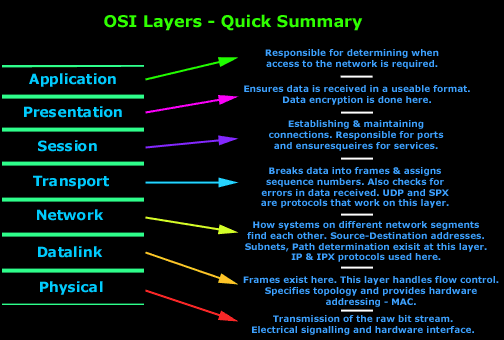
The OSI Model

OSI is a standard description or "reference model" for how messages should be transmitted between any two points in a telecommunication network. Its purpose is to guide product implementors so that their products will consistently work with other products.

As most are aware of, the OSI model consists of 7 layers.

Each layer has been designed to do a specific task. Starting from the top layer (7) we will see how the data which you type gets converted into segments, the segments into datagrams and the datagrams into packets, the packets into frames and then the frames are sent down the wire, usually twisted pair, to the receiving computer.
7-layer-osi-analysis

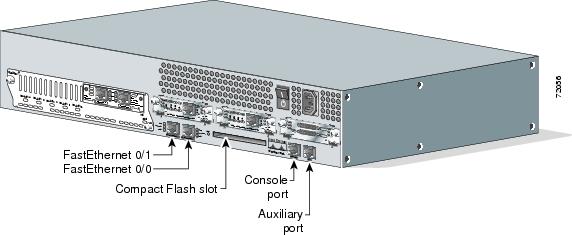
What is Router ?

A router is a device that forwards data packets between computer networks, creating an overlay internetwork. A router is connected to two or more data lines from different networks. When a data packet comes in one of the lines, the router reads the address information in the packet to determine its ultimate destination. Then, using information in its routing table or routing policy, it directs the packet to the next network on its journey. Routers perform the "traffic directing" functions on the Internet. A data packet is typically forwarded from one router to another through the networks that constitute the internetwork until it reaches its destination node.

Information About VLAN

What is a LAN?

Okay, most of you already know what a LAN is but let’s give it a definition to make sure. We have to do this because, if you don’t know what a LAN is, you can’t understand what a VLAN is.A LAN is a local area network and is defined as all devices in the same broadcast domain. If you remember, routers stop broadcasts, switches just forward them.

What is a VLAN?

As I said, a VLAN is a virtual LAN. In technical terms, a VLAN is a broadcast domain created by switches. Normally, it is a router creating that broadcast domain. With VLAN’s, a switch can create the broadcast domain.This works by, you, the administrator, putting some switch ports in a VLAN other than 1, the default VLAN. All ports in a single VLAN are in a single broadcast domain.Because switches can talk to each other, some ports on switch A can be in VLAN 10 and other ports on switch B can be in VLAN 10. Broadcasts between these devices will not be seen on any other port in any other VLAN, other than 10. However, these devices can all communicate because they are on the same VLAN. Without additional configuration, they would not be able to communicate with any other devices, not in their VLAN.

Are VLANs required?

It is important to point out that you don’t have to configure a VLAN until your network gets so large and has so much traffic that you need one. Many times, people are simply using VLAN’s because the network they are working on was already using them.Another important fact is that, on a Cisco switch, VLAN’s are enabled by default and ALL devices are already in a VLAN. The VLAN that all devices are already in is VLAN 1. So, by default, you can just use all the ports on a switch and all devices will be able to talk to one another.

When do I need a VLAN?

You need to consider using VLAN’s in any of the following situations:
*You have more than 200 devices on your LAN
*You have a lot of broadcast traffic on your LAN
*Groups of users need more security or are being slowed down by too many broadcasts?
*Groups of users need to be on the same broadcast domain because they are running the same applications. An example would be a company that has VoIP phones. The users using the phone could be on a different VLAN, not with the regular users.Or, just to make a single switch into multiple virtual switches.

Why not just subnet my network?

A common question is why not just subnet the network instead of using VLAN’s? Each VLAN should be in its own subnet. The benefit that a VLAN provides over a subnetted network is that devices in different physical locations, not going back to the same router, can be on the same network. The limitation of subnetting a network with a router is that all devices on that subnet must be connected to the same switch and that switch must be connected to a port on the router.

Wednesday, 24 July 2013

Bridges

A bridge is used to join two network segments together, it allows computers on either
segment to access resources on the other. They can also be used to divide large
networks into smaller segments. Bridges have all the features of repeaters, but can have
more nodes, and since the network is divided, there is fewer computers competing for
resources on each segment thus improving network performance.


Bridges can also connect networks that run at different speeds, different topologies, or
different protocols. But they cannot, join an Ethernet segment with a Token Ring
segment, because these use different networking standards. Bridges operate at both the
Physical Layer and the MAC sublayer of the Data Link layer. Bridges read the MAC
header of each frame to determine on which side of the bridge the destination device is
located, the bridge then repeats the transmission to the segment where the device is located.

SWITCHES

Switches are a special type of hub that offers an additional layer of intelligence to basic,
physical-layer repeater hubs. A switch must be able to read the MAC address of each
frame it receives. This information allows switches to repeat incoming data frames only
to the computer or computers to which a frame is addressed. This speeds up the
network and reduces congestion.
Switches operate at both the physical layer and the data link layer of the OSI
Model.

HUB

HUB
Networks using a Star topology require a central point for the devices to connect.
Originally this device was called a concentrator since it consolidated the cable runs from
all network devices. The basic form of concentrator is the hub.

As shown in Figure; the hub is a hardware device that contains multiple, independent
ports that match the cable type of the network. Most common hubs interconnect
Category 3 or 5 twisted-pair cable with RJ-45 ends, although Coax BNC and Fiber Optic
BNC hubs also exist. The hub is considered the least common denominator in device
concentrators. Hubs offer an inexpensive option for transporting data between devices,
but hubs don't offer any form of intelligence. Hubs can be active or passive.

An active hub strengthens and regenerates the incoming signals before sending the
data on to its destination.

Passive hubs do nothing with the signal.

Ethernet hubs

An Ethernet hub is also called a multiport repeater. A repeater is a device that amplifies
a signal as it passes through it, to counteract the effects of attenuation. If, for example,
you have a thin Ethernet network with a cable segment longer than the prescribed
maximum of 185 meters, you can install a repeater at some point in the segment to
strengthen the signals and increase the maximum segment length. This type of repeater
only has two BNC connectors, and is rarely seen these day


8 Port mini Ethernet Hub

The hubs used on UTP Ethernet networks are repeaters as well, but they can have many
RJ45 ports instead of just two BNC connectors. When data enters the hub through any
of its ports, the hub amplifies the signal and transmits it out through all of the other
ports. This enables a star network to have a shared medium, even though each
computer has its own separate cable. The hub relays every packet transmitted by any
computer on the network to all of the other computers, and also amplifies the signals.
The maximum segment length for a UTP cable on an Ethernet network is 100 meters. A
segment is defined as the distance between two communicating computers. However,
because the hub also functions as a repeater, each of the cables connecting a computer
to a hub port can be up to 100 meters long, allowing